Professional slab leak spot repair for Bradenton and Manatee County homes.
A slab leak spot repair fixes the damaged pipe section directly through a small opening in the concrete at the exact located leak point. The crew opens the slab, repairs or replaces the failed section, pressure tests the line, patches the concrete, and prepares the floor for restoration in Bradenton homes. Call (941) 307-1712
Spot repair is the most direct answer to a slab leak: go straight to the break and fix it. After electronic detection marks the exact location, the crew opens a small section of concrete above the pipe, repairs the damaged section, tests the line, and closes the floor back up. For a single break in otherwise healthy pipe, this approach solves the problem at its source without reworking the whole plumbing system. Bradenton homeowners choose it when detection shows one clear failure and the surrounding line tests sound.
The honesty of spot repair depends entirely on the detection that comes before it. A precise mark means a small opening, and a verified healthy line means the repair should last. That is why pressure testing the full line matters before deciding: if the pipe shows weakness at multiple points, fixing one spot simply leaves the next leak waiting. We will tell you plainly when spot repair fits and when it does not. Call (941) 307-1712 to have your leak located and your options explained before any concrete is cut.
Spot repair suits many Bradenton homes because their leaks often come from a single cause: a fitting that finally failed, a section of copper thinned by decades of water chemistry, or a line damaged by soil movement in sandy ground. Ranch homes from the 1950s to the 1970s frequently have one weak joint or elbow while the rest of the run remains serviceable. In those cases, opening a small area, replacing the bad section with sound material, and pressure testing the result restores the line without the scope of a full reroute.
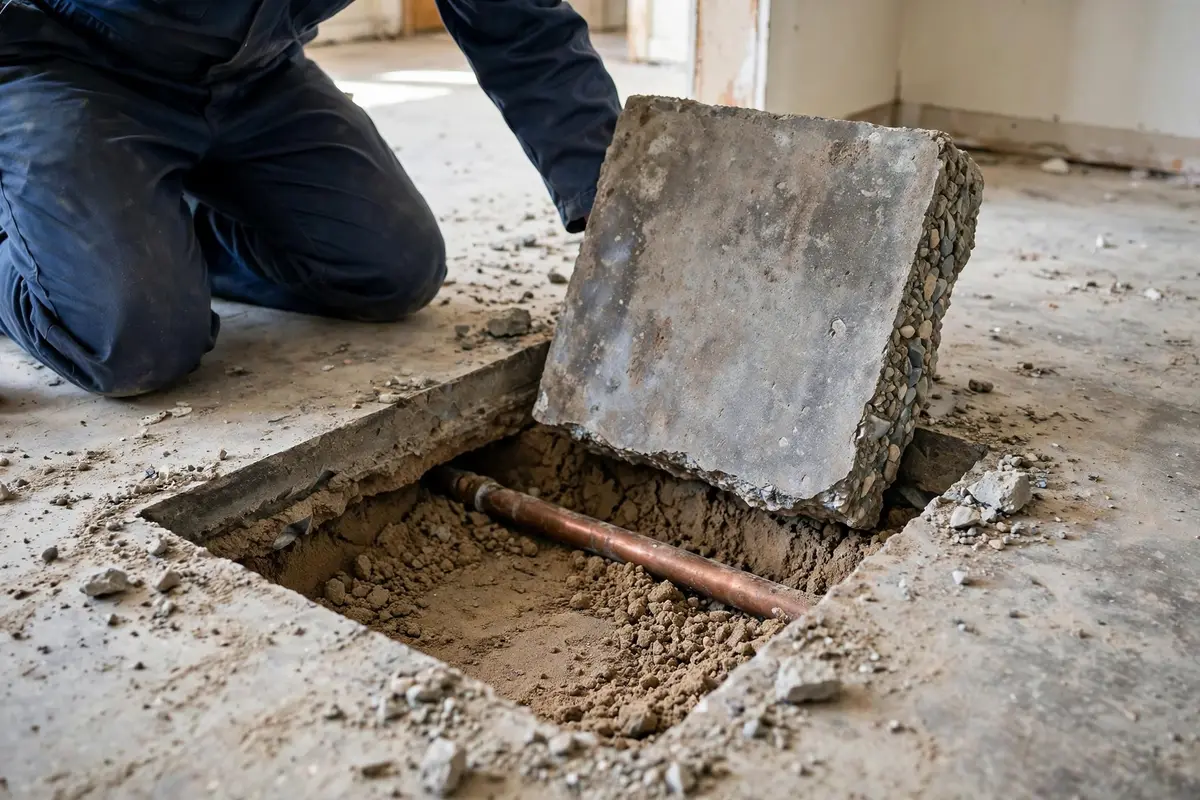
The opening process is controlled and tidy. The marked area is cut cleanly, the concrete section is removed, and the soil or gravel bed beneath is excavated by hand around the pipe to avoid damaging nearby lines. Because Bradenton soil is sandy, the crew works carefully to keep the excavation stable and to expose enough pipe to make a proper repair rather than a cramped patch. Water and debris are managed as the work proceeds, and the rest of the floor stays covered and protected throughout the job.
Once exposed, the pipe tells its own story. The technician can see whether the break is a pinhole, a split, a failed fitting, or corrosion spreading along a section. That visual evidence guides how much pipe gets replaced: enough to reach sound material on both sides of the damage, with new fittings and proper support for the repaired run. If the exposed pipe reveals deterioration far beyond the original leak, you hear about it before more work happens, and the plan can change with your approval.
Depth and location shape the opening as well. Lines near the slab edge or under a garage floor are reached differently from lines under a tiled bathroom in the middle of the home. Tile and wood floors need extra care at the cut lines so surrounding material survives for patching. The crew explains the opening size and the flooring impact for your specific room before starting, so there are no surprises when the coverings come up. A well planned opening is one reason detection accuracy pays for itself.
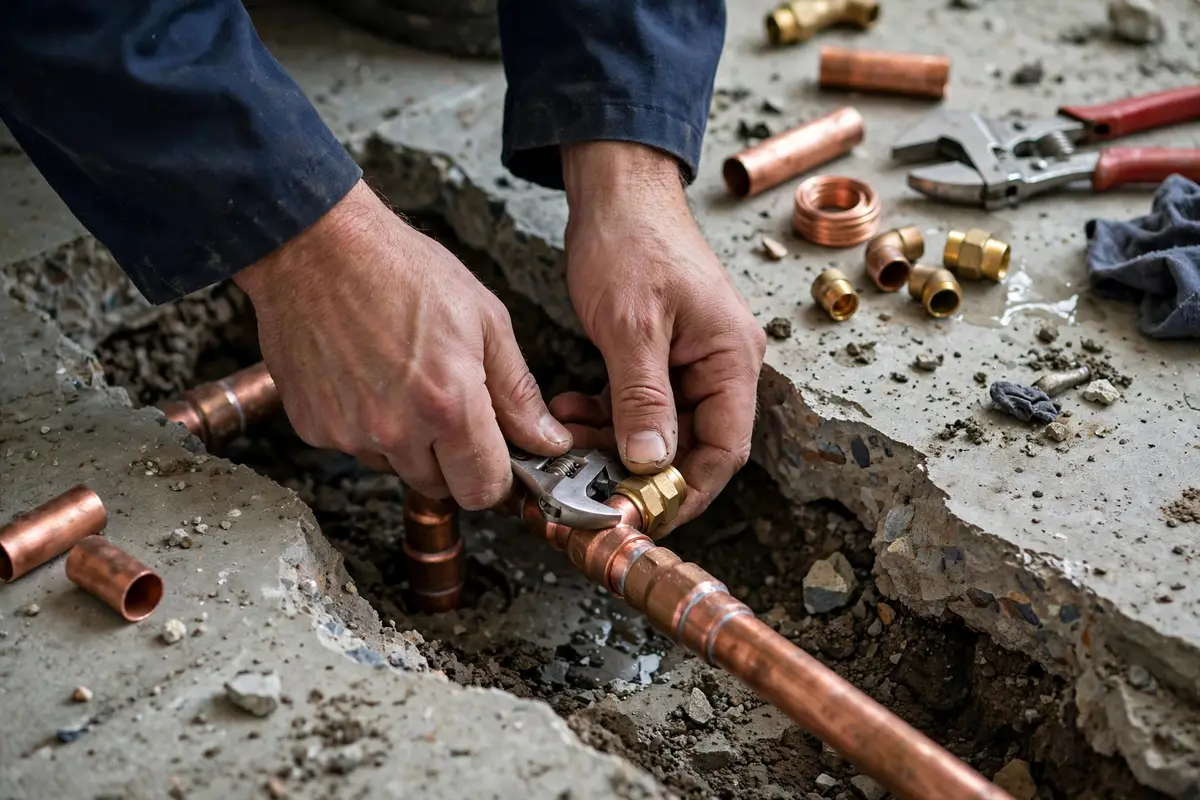
With the pipe exposed, the damaged section is cut out and replaced with new material matched to your system, joined with proper fittings, and supported so it does not rest against sharp aggregate or stressed angles. The repaired line is then pressure tested while it is still visible, which is the best moment to prove the fix holds. Only after the test passes does backfilling begin, using clean material compacted around the pipe to restore support. Skipping steps here causes future problems, so each stage gets verified before the next one covers it.
The concrete patch restores the slab surface level with the surrounding floor, using bonding preparation so new concrete ties into the old slab edges rather than sitting as a loose plug. Proper patching matters for flooring: tile and floating floors telegraph uneven patches, and a careful finish saves frustration during restoration. The patch needs curing time before flooring work, and we explain that timeline plainly. In Manatee County humidity, drying and curing should not be rushed, especially where moisture was present under the slab before the repair.
Flooring restoration is the final step, and the small opening size keeps it manageable. A tile or two, a short run of laminate, or a section of carpet can usually be reinstalled or matched without redoing the whole room, though exact material matches depend on what is available for older floors. We leave the area clean and ready for your flooring installer or for simple homeowner finishing. If you need guidance on sequencing the restoration, call (941) 307-1712 and we will walk through what comes next.
Spot repair is the right choice when the evidence points to a single failure in a line that is otherwise sound. That evidence includes one clearly located break, pressure testing that shows no other losses, and exposed pipe that looks healthy beyond the damaged section. It also fits when the leak sits in an accessible place where a small opening will not disturb major finishes, and when the pipe material still has good service life left. In those conditions, spot repair is the fastest, least disruptive path back to normal water service. Time is the other factor in the decision: a spot repair typically restores full service faster than a reroute of the same line, which matters when the home has one bathroom or the leak shut down the whole supply. Speed only counts, though, when the pipe condition justifies it. A fast repair on failing pipe is not a saving; it is a postponement with a floor opening attached to it.
It is the wrong choice when the pipe is failing as a system. Multiple leaks in the same line, widespread corrosion visible at the opening, or a history of repeated slab repairs all argue for rerouting or lining instead. Fixing spot after spot in deteriorated pipe costs more over time and cuts the floor repeatedly. An honest assessment weighs the age of the lines, the material, and the leak history of your Bradenton home. The recommendation you receive follows that evidence, even when the better advice is the larger project. Ask to see the failed section after it is removed, because the cut out piece shows exactly why the pipe leaked: a pinhole worn through, a split along a seam, or a fitting that crumbled. Seeing the evidence makes the recommendation for any further work easy to judge. Photographs of the exposed pipe and the pressure test are worth keeping with your home records for future reference.
A properly executed spot repair seals the damaged section for the remaining life of the surrounding pipe, because the failed material is physically removed and replaced with new pipe and fittings, then proven with a pressure test. The repair itself is not a temporary patch or a sealant; it is new plumbing in the ground. Its longevity therefore depends on the condition of the older pipe it connects to. Sound neighboring pipe means the repaired section should serve quietly for years without attention. Protecting the repair afterward is simple: avoid driving heavy loads over the patched area until the concrete has cured as directed, and keep the restoration timeline the crew gives you. If the floor above the patch ever shows fresh dampness, treat it as a new signal worth a meter check rather than assuming the repair failed, because new leaks in aging systems announce themselves the same way.
What shortens that outlook is systemic aging rather than the repair work. If the rest of the buried line is thinning at the same rate as the section that failed, future leaks can appear elsewhere along the run, unrelated to the quality of the spot repair. That is why the post repair conversation covers monitoring habits: watching the meter, noting pressure changes, and scheduling periodic checks for older systems. Knowing the difference between a finished repair and an aging system helps you plan calmly instead of being surprised later. Homeowners sometimes ask whether a repaired section is weaker than the original pipe, and the answer is the opposite: the new material and fittings are the youngest part of the line. The honest uncertainty is never the repair itself but the remaining old pipe around it. That is why the final pressure test covers the entire line, not just the patched section, before anything is covered up.
Straight answers before you call.
Describe the signs you are seeing and we will point you to the right next step.
Call (941) 307-1712The opening is sized to the work, typically large enough to expose the damaged section and allow proper cutting and joining, but kept as small as accurate detection allows. Precise location work is what keeps it modest.
In most cases, yes. The cut follows the marked location, and individual tiles within the opening are removed while surrounding tiles stay in place. Replacement tiles go back over the patched concrete once it cures. Matching older tile exactly can be a challenge, but a small, neat repair area gives you the best chance of an inconspicuous finish.
Then you get the full picture before anything else proceeds. The technician shows you the exposed pipe condition, explains what it means, and revisits the options, which may shift toward rerouting if the line is deteriorated along its length. No expanded work happens without your approval.
Water service to the repaired line returns once the new section is joined and the pressure test passes, which is normally during the same visit for the repair itself. The concrete patch and flooring restoration follow their own curing timeline, but your plumbing is functional before that finishing work completes. Your technician will confirm exactly when full use can resume.
It depends on where the new leak sits and what the pipe condition shows. A second leak in a different, otherwise healthy line can still suit a spot repair. Repeated leaks along the same aging line suggest the system is wearing out, and rerouting usually becomes the wiser investment. The detection and pressure test results guide that call honestly.
Slab leaks flooding your Bradenton home found and fixed fast, day or night.
Under-slab leaks pinpointed with acoustic and thermal tools before any concrete is cut.
Electronic listening and correlation equipment that hears the leaks your ears cannot.
Hidden water leaks in walls, ceilings, and yards traced to their exact source.
Call now and describe what is happening. We will take it from there.
Call (941) 307-1712