Professional pool leak detection for Bradenton and Manatee County homes.
Pool leak detection separates normal Florida evaporation from a real leak, then locates it in the shell, plumbing lines, spa, or equipment pad. Technicians use the bucket test, dye testing, and pressure testing of pool lines to pinpoint the loss in Bradenton pools before digging or resurfacing decisions. Call (941) 307-1712
A pool that needs filling more often than its neighbors raises a fair question: evaporation or leak? In Bradenton heat, evaporation is real, but so are leaks in aging pool plumbing, and the two look identical from the deck. Pool leak detection answers the question with tests, then narrows the loss to the shell, a suction or return line, the spa, or the equipment pad. Each location has a different repair, so locating first saves both water and money. Call (941) 307-1712 to schedule testing.
Local conditions make the distinction harder than it sounds. Summer sun and wind strip water from the surface daily, while rainy season storms from June to October refill pools and hide losses entirely. A leaking pool may look perfectly normal through the wet months, then drop noticeably when the rains stop. Irrigation overspray and splash out add more noise to the picture. Structured testing cuts through all of it by measuring loss under controlled conditions and comparing it against evaporation measured at the same pool, on the same days.
Finding the leak early matters beyond the water bill. Pool water escaping underground in sandy Bradenton soil washes support away from the shell and deck, saturates the ground near the foundation of nearby structures, and wastes treated water continuously. Leaks at the equipment pad also corrode pumps and heaters from outside. A detected, located leak becomes a defined repair; an ignored one becomes erosion plus equipment damage. Detection is the step that keeps a pool problem in the pool budget instead of letting it spread.
The bucket test is the classic first check, and it is worth understanding even though professionals verify with instruments. A bucket filled with pool water sits on a step, and the water level inside and outside the bucket is marked. After a day, the levels are compared: if the pool dropped more than the bucket, the pool lost water beyond evaporation, since both were exposed to the same sun and wind. Running the test with the pump on and then off adds clues about whether the leak involves the pressurized plumbing.
Home bucket tests have limits worth respecting. Wind, rain, splashing, and a bucket placed in different sunlight than the pool surface can all skew the comparison. A single day of data is also thin evidence for a slow leak. Treat your result as a reason to call rather than a verdict: a clear difference suggests a leak worth locating, while equal levels over several calm days suggest evaporation is the whole story. Either way, you have replaced guessing with a measurement, which is exactly the spirit of the professional process that follows.
Professional testing builds on the same logic with tighter controls. Water loss is measured over set intervals with the system in different states, pump running, pump off, and individual lines isolated, so the pattern of loss itself points toward the source. A pool that loses more with the pump running implicates pressure side plumbing; one that loses only down to a certain level suggests a leak at that height in the shell, a fitting, or a light niche. Those patterns guide where dye and pressure testing are applied first.
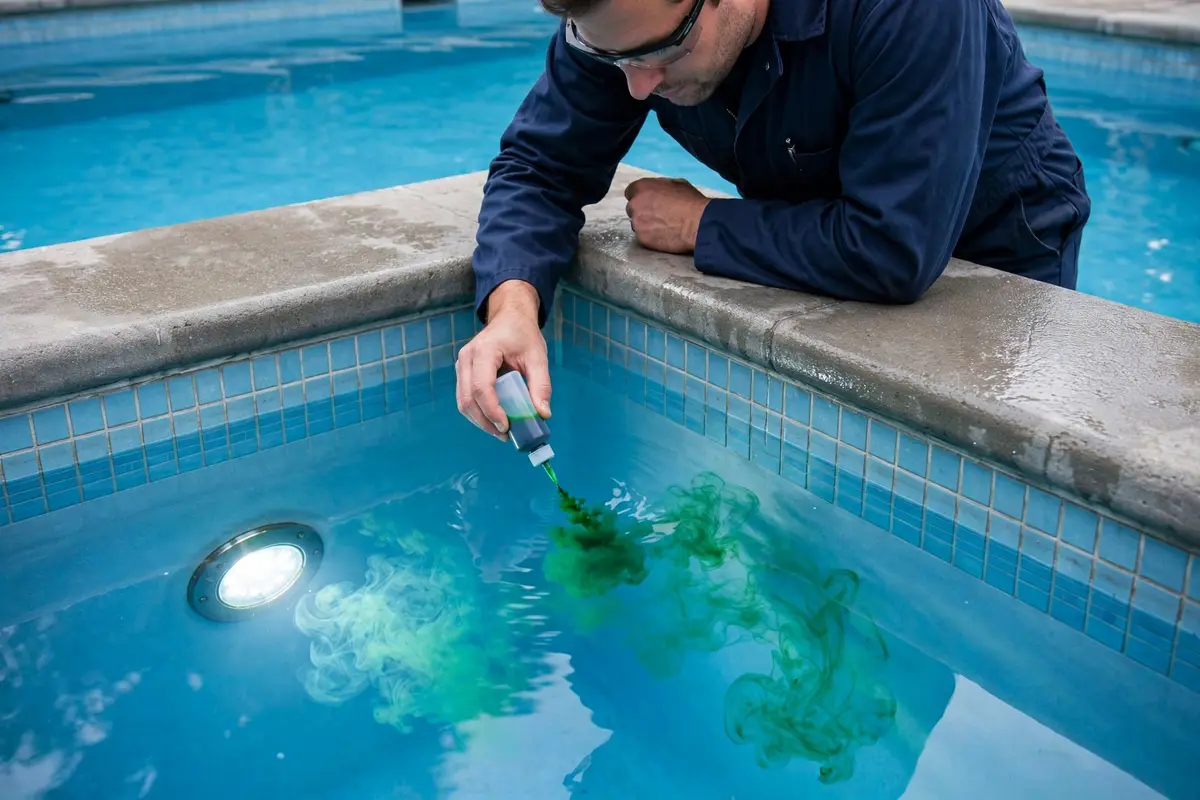
Dye testing finds shell and fitting leaks by watching water move. With the pump off and the water still, the technician releases small amounts of dye near suspected points: skimmers, return fittings, lights, drains, and visible cracks. If a leak is present, the dye streams steadily toward and into the defect instead of dispersing, revealing the exact spot. The method is patient, close work, done in the water at the fitting level. It confirms leaks that evaporation tests can only suggest, and it marks them precisely for repair.
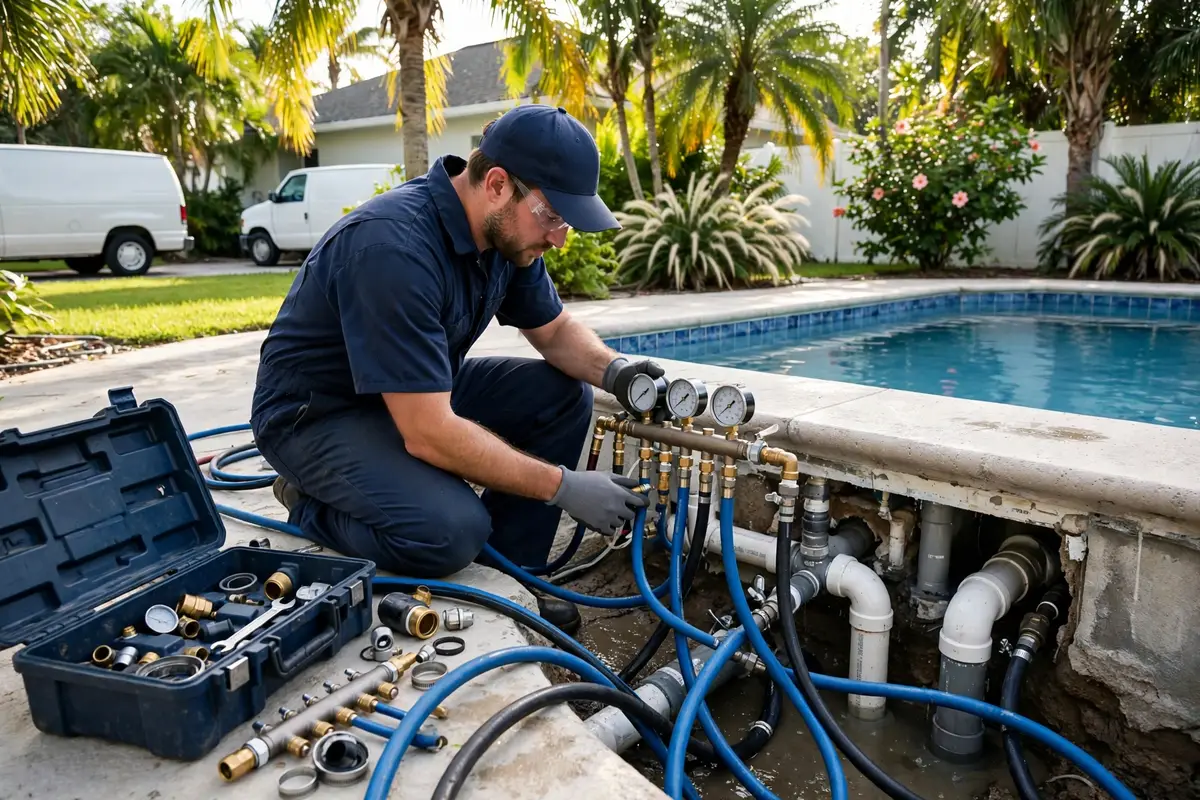
Pressure testing handles the buried plumbing. Pool lines are isolated in sections and pressurized, and a section that cannot hold pressure contains a leak. Listening equipment and targeted excavation points then narrow the location along that line, much as with household slab detection. This matters in Bradenton, where pool lines often run under concrete decks and through sandy soil that hides surface evidence completely. Testing each line separately, suction, returns, cleaner lines, and spa plumbing, prevents the common mistake of digging up the wrong run.
The equipment pad gets its own inspection, since leaks there are frequent and cheap to fix relative to buried ones. Pump seals, filter housings, heater connections, valves, and glued joints all weep with age, and pad leaks waste water while corroding the equipment meant to be protected. Dye, pressure data, and a careful pad check together cover the whole system. By the end of the visit, you know whether your pool leaks, where it leaks, and what repair path fits each location found, with no deck concrete disturbed unnecessarily.
Plumbing leaks reveal themselves through patterns. If the pool loses noticeably more water while the pump runs, the pressure side of the system, the return lines and fittings after the pump, is the prime suspect, because those lines only carry pressure when the pump operates. Air bubbles in the pump basket or returns, a pump that struggles to prime, and gurgling sounds point instead toward the suction side drawing air through a leak. Loss that stops at a consistent level, like the bottom of the skimmer or a light fixture, suggests the leak sits at that height. A measured loss rate also helps prioritize. A pool losing water slowly at a fitting can be scheduled calmly, while a fast loss in a buried line under the deck deserves quick attention before erosion grows. Either way, the repair estimate you receive afterward rests on a located problem, not on a menu of possibilities. That is the difference between buying a repair and buying a search with a jackhammer.
Confirmation replaces pattern reading with proof. Pressure testing isolates each plumbing section and measures whether it holds, turning suspicion into a named line that leaks. Dye testing then checks the shell and fittings so a plumbing verdict is not reached by elimination alone. The distinction matters because repairs differ completely: a line repair under the deck, a fitting reseal in the shell, or a simple pad fix at a valve. Bradenton pool owners get that separation in writing before any repair is scheduled or any deck is opened. Homeowners can support accurate testing by keeping the pool at normal level before the visit, noting how often they have been refilling, and mentioning any recent deck work, lighting changes, or equipment replacements. Those details often point straight at the disturbed fitting or line. Avoid adding leak seal products before testing, since they can mask dye results and complicate an honest diagnosis of where the water is actually going.
Spas connected to pools add their own leak points, and they usually start at connections and penetrations. Jet fittings, the spillway interface, shared suction and return lines, and the valves that switch flow between pool and spa modes all age under heat, chemicals, and constant pressure changes. A spa that drains down toward the pool level when the system rests, or that loses water only in spa mode, is telling you where to look first. Testing isolates the spa plumbing so its lines are judged on their own pressure results. The final report separates the systems plainly: shell and fittings, suction lines, return lines, spa plumbing, and the equipment pad each get a verdict. A pool that passes everywhere is documented as evaporation, with the measured rate recorded for future comparison. A pool with a located leak gets a repair recommendation matched to that exact point, so deck concrete is opened once, in the right place, or not at all.
Equipment pad leaks usually start at seals and joints rather than in pipes. Pump lid seals and shaft seals weep as they wear, filter housings crack or lose their seal under pressure, heater headers and unions loosen with thermal cycling, and glued PVC joints grow brittle in Florida sun. The pad is inspected running and at rest, since some leaks only appear under pressure while others drip steadily. Catching pad leaks early protects the equipment itself, because water dripping across motors and heaters shortens their working lives considerably. Seasonal timing is worth planning around where possible. Testing in a dry stretch produces the cleanest measurements, and repairing a located line before rainy season avoids months of hidden loss under storm filled water. If your pool survived the summer on frequent refills, the calm weeks of autumn are an ideal moment to get a definite answer and schedule the fix while the evidence is easy to read.
Straight answers before you call.
Describe the signs you are seeing and we will point you to the right next step.
Call (941) 307-1712Evaporation varies with sun, wind, humidity, and whether the pool is screened or heated, so a fixed number is unreliable. That is exactly why the bucket test compares your pool against a controlled reference at the same location and time. Loss clearly beyond the bucket level over the test period indicates a leak worth locating.
Yes. During rainy season, storms regularly top up pools, and a leaking pool can hold a normal level for months while still losing water underground every day. The leak often reveals itself in the drier months when the level starts dropping between fills.
No. Detection is performed with the pool full and operating, because the tests depend on normal water levels and system pressure. Dye testing is done in the water at fittings and suspected points, and pressure testing uses the pool plumbing as it sits. Draining would actually remove the evidence.
That pattern points strongly to the pressure side plumbing: return lines, cleaner lines, or fittings that are only pressurized while the pump operates. Pressure testing those sections individually confirms which line is responsible.
Yes. Escaping pool water in sandy soil erodes support under decks and the pool shell surround, keeps ground near structures saturated, and can contribute to settling or hollow areas under concrete. The longer a buried line leaks, the more soil it moves.
Slab leaks flooding your Bradenton home found and fixed fast, day or night.
Under-slab leaks pinpointed with acoustic and thermal tools before any concrete is cut.
Electronic listening and correlation equipment that hears the leaks your ears cannot.
Hidden water leaks in walls, ceilings, and yards traced to their exact source.
Call now and describe what is happening. We will take it from there.
Call (941) 307-1712